After reading the signs at Noyo Headlands, I was curious about 10 Mile Beach.
I decided that I wanted to hike as many trails as possible between 10 Mile Beach and Van Damme State Park.

After hiking from Seaside Beach to 10 Mile Beach, I moved my car over to the 10 Mile Beach parking lot.
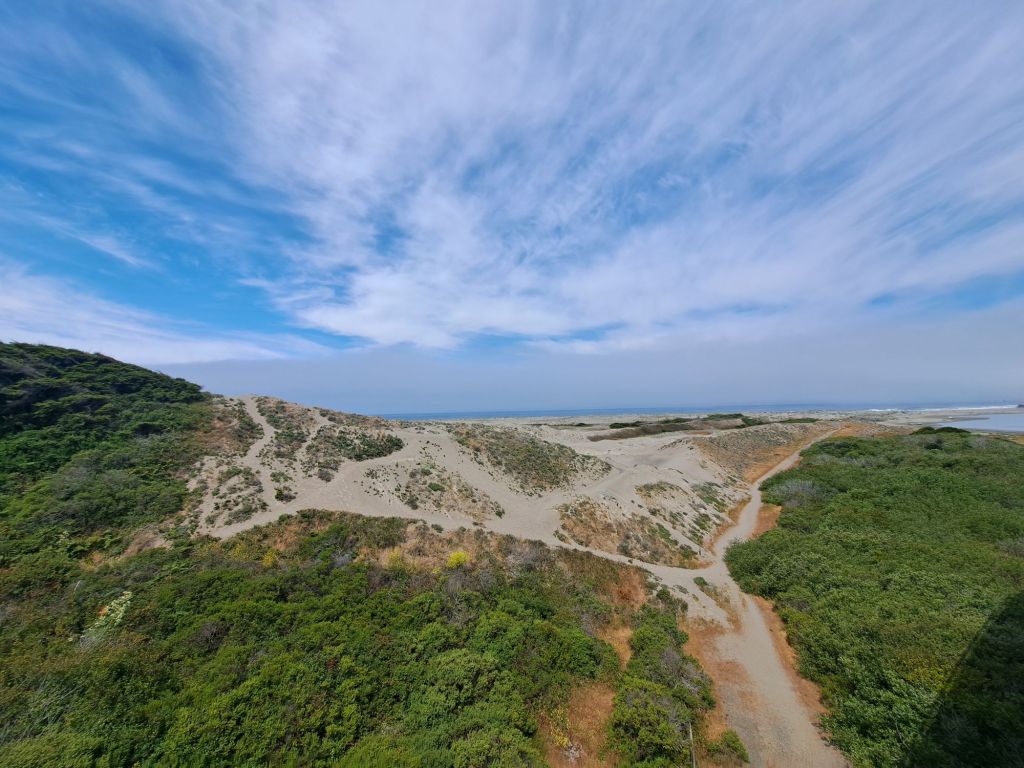
From the parking lot, there was an accessible trail across the bridge, or a hiking trail across the sand dunes to the beach.
I walked about halfway across the bridge to see the view of the ocean and sand dunes, and then went back to the hiking trail.

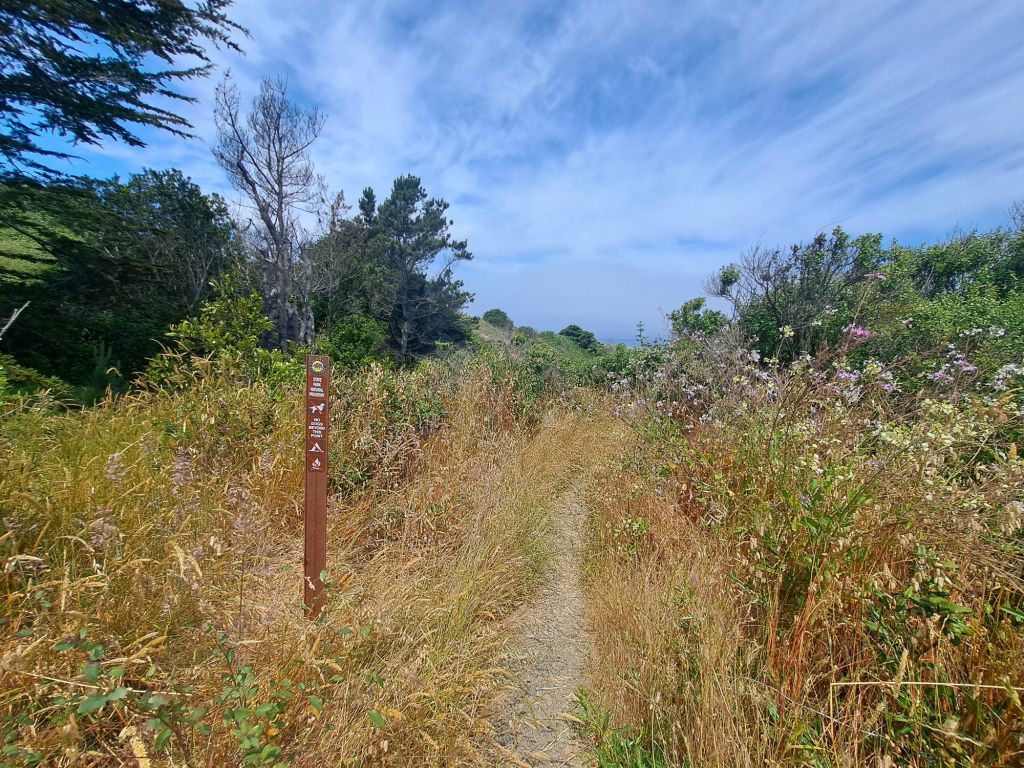
The first hundred yards or so of the trail was incredibly dense raspberry and blackberry bushes. This suddenly broke into sand dunes, which were difficult to hike up.
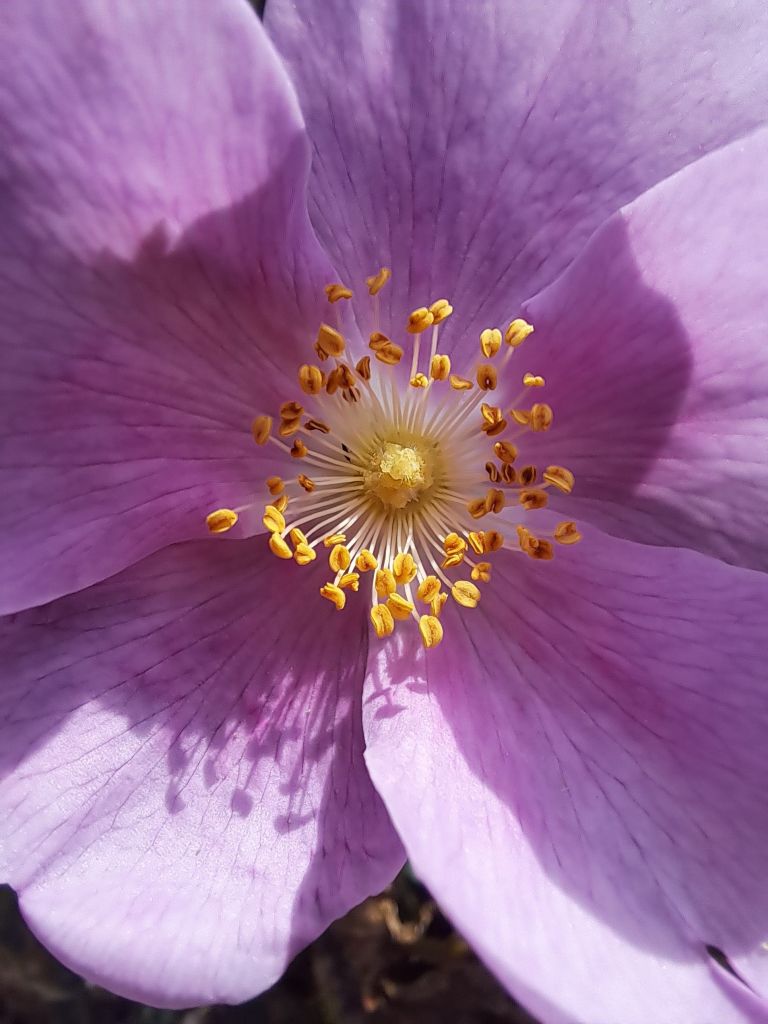
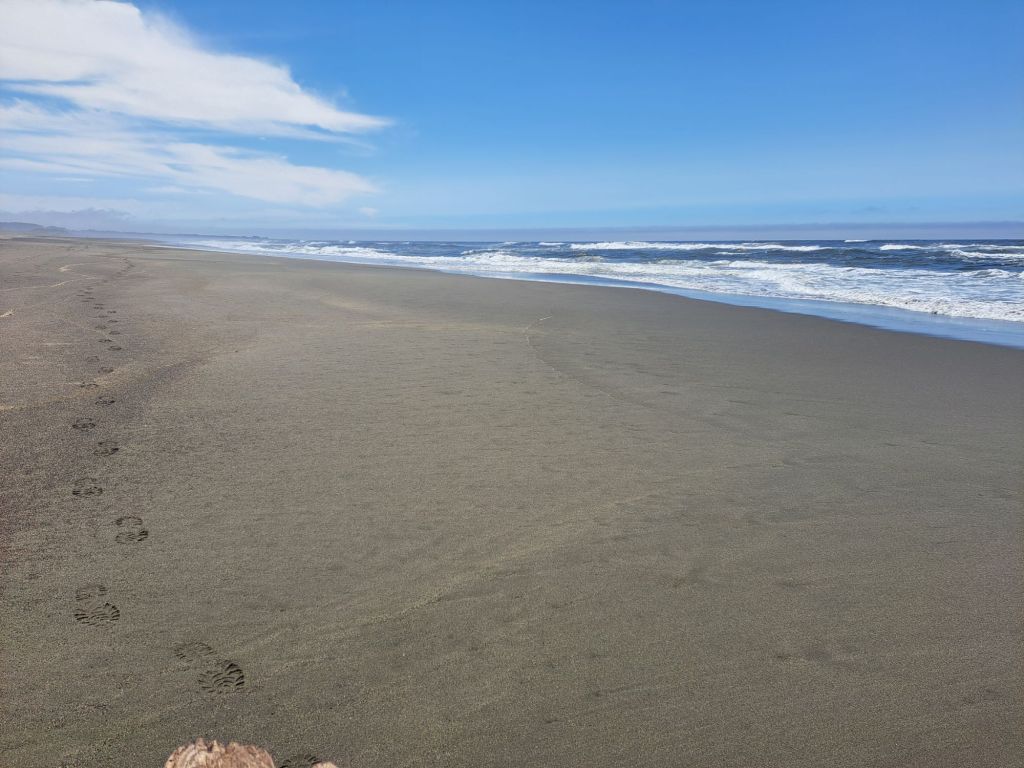
10 Mile Beach was much more difficult to get to than Seaside Beach, but it’s also way bigger. I’m not sure if it actually goes on for ten miles, but I hiked a few miles each way.
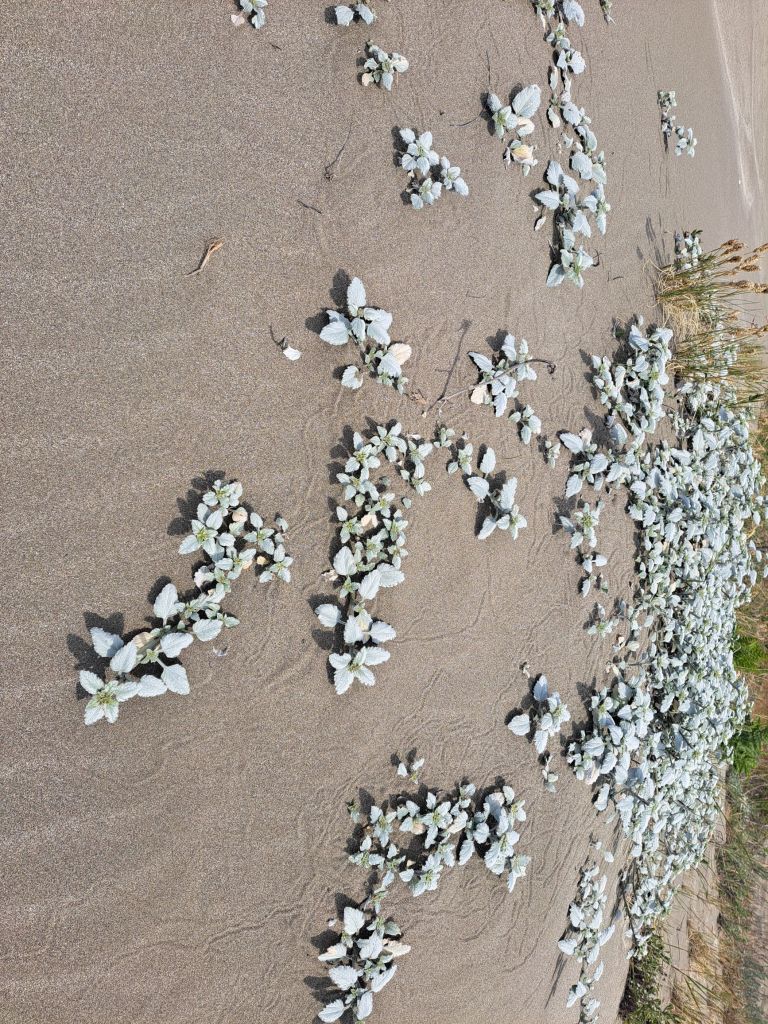
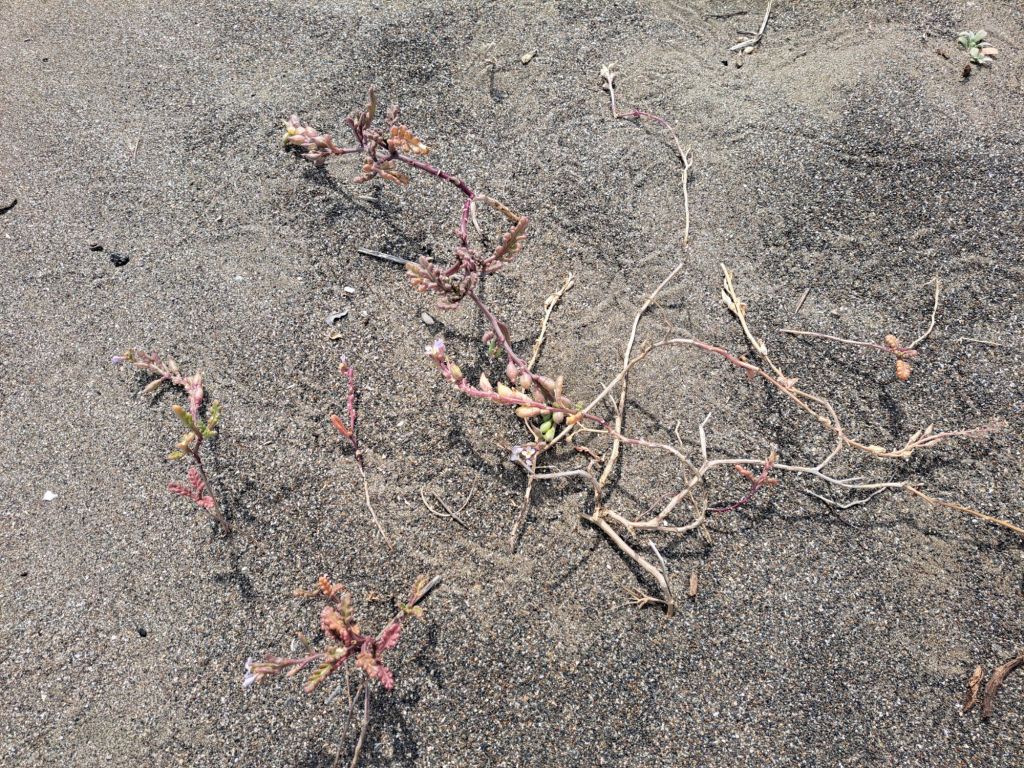

Even after hiking for over an hour, the scenery was unchanged. I was walking between sand dunes and shore. The dunes themselves were mostly off limits, as they are roped off to protect the birds.
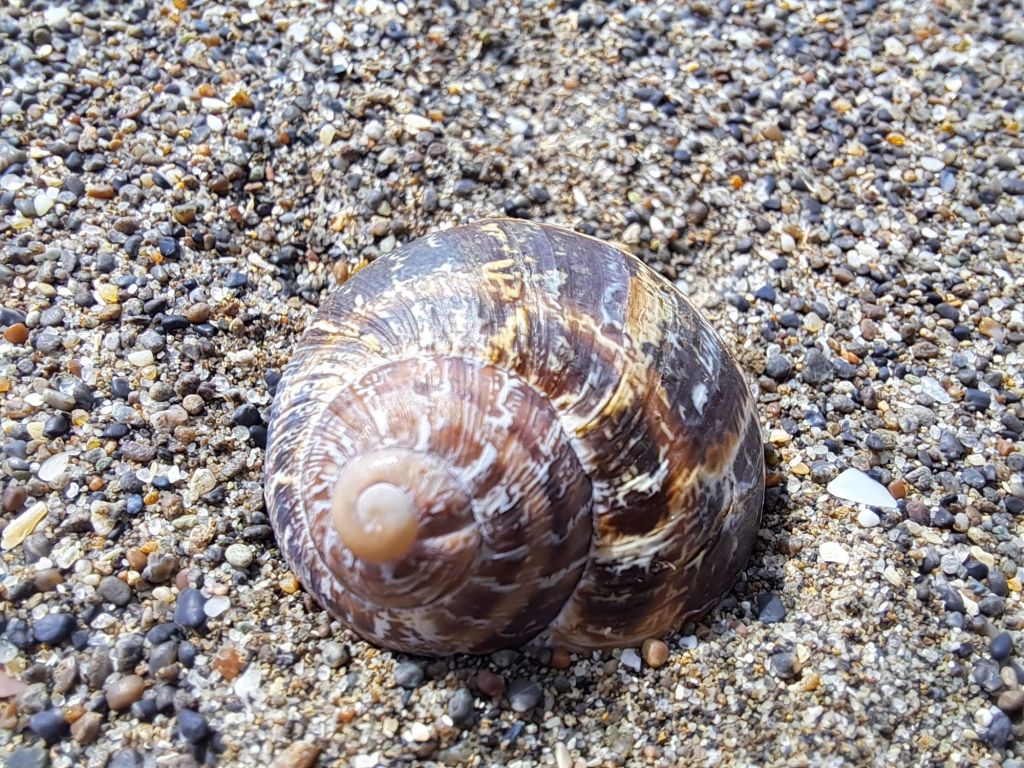
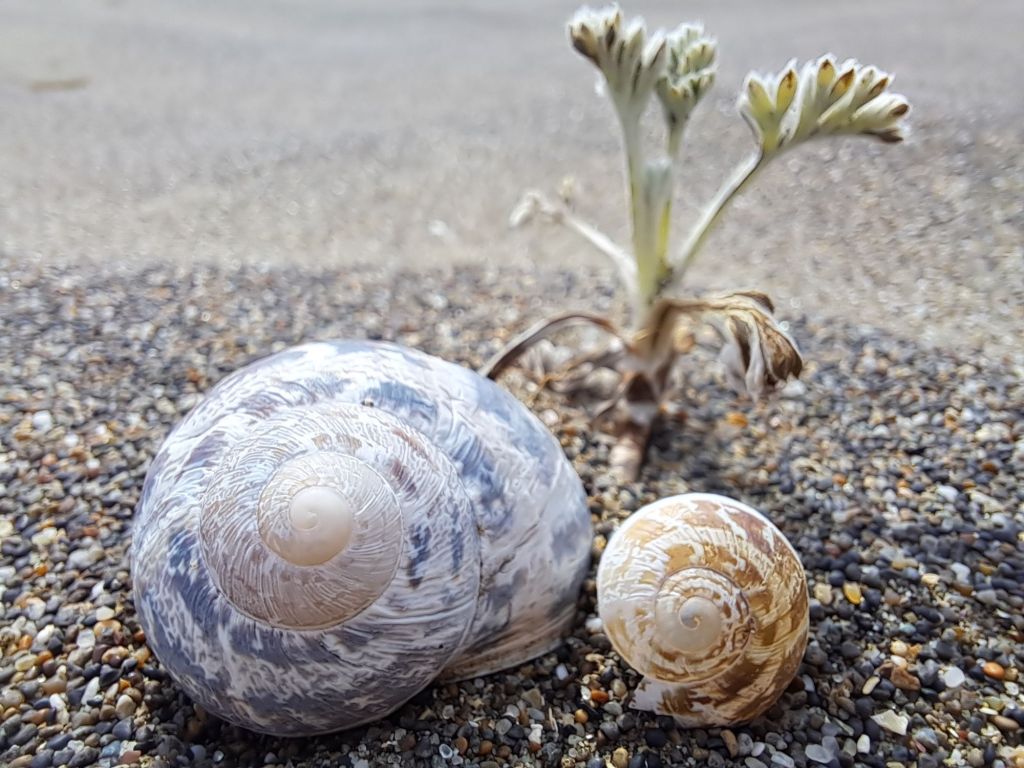
There are only a few hundred pairs of breeding Snowy Plovers left, so it’s no surprise that I didn’t see any of them. I just saw lots and lots of seagulls.
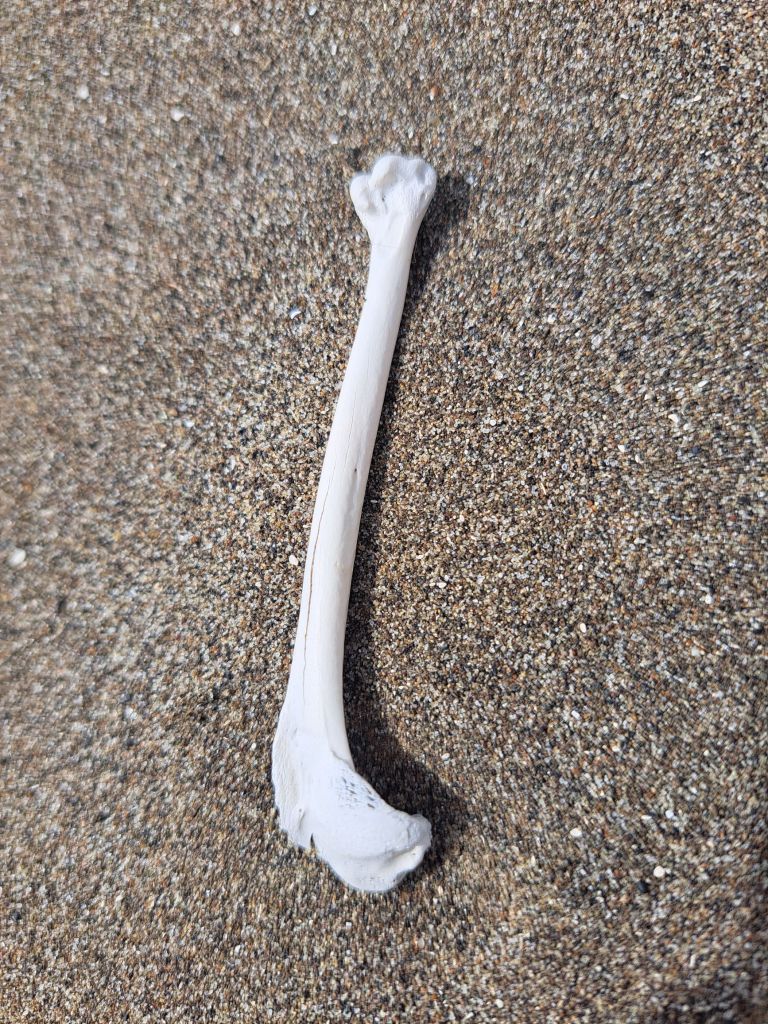
In order to help protect the Snowy Plovers, dogs are not allowed on 10 Mile Beach, but they are allowed up the road at Seaside Beach.

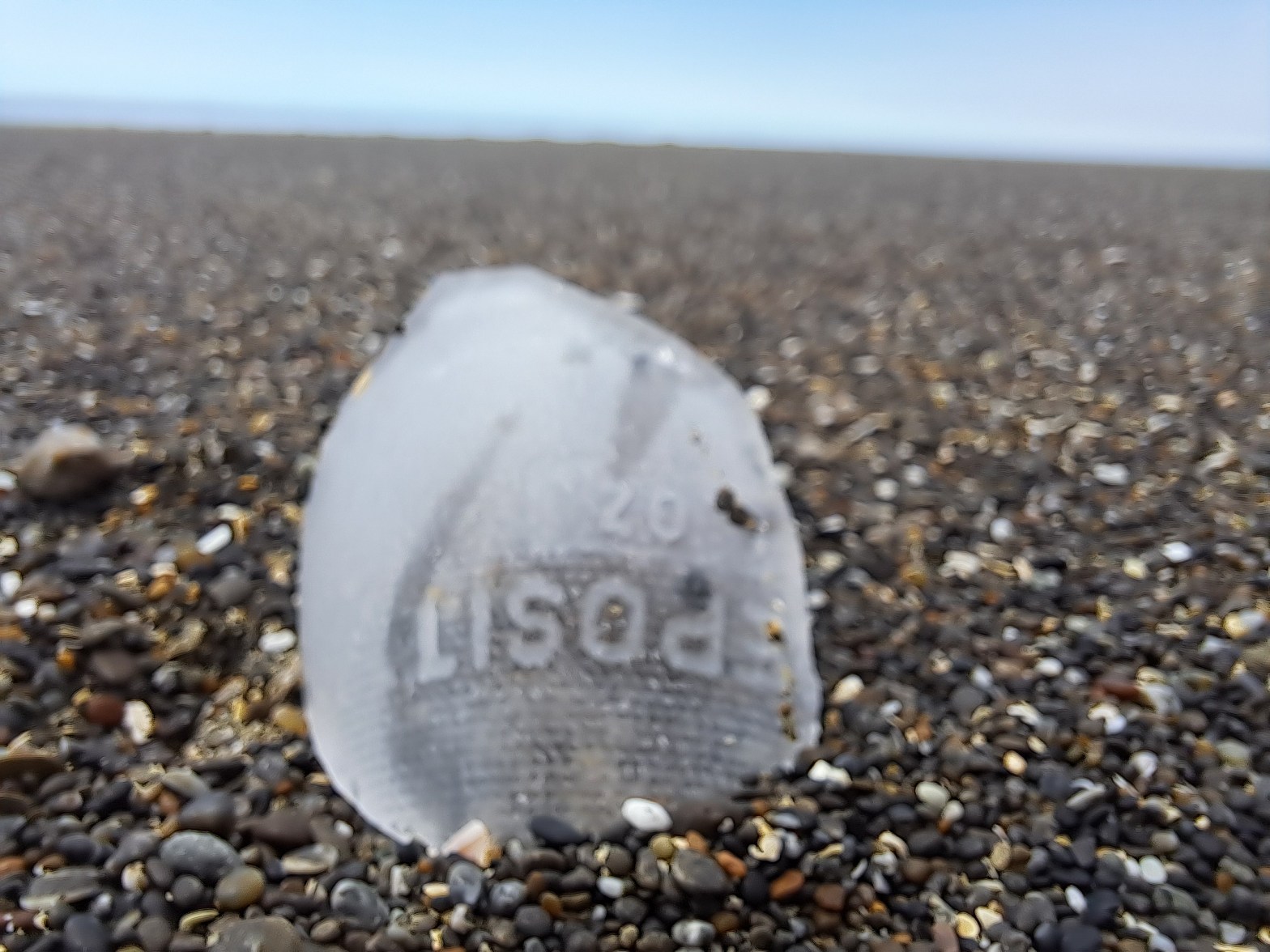
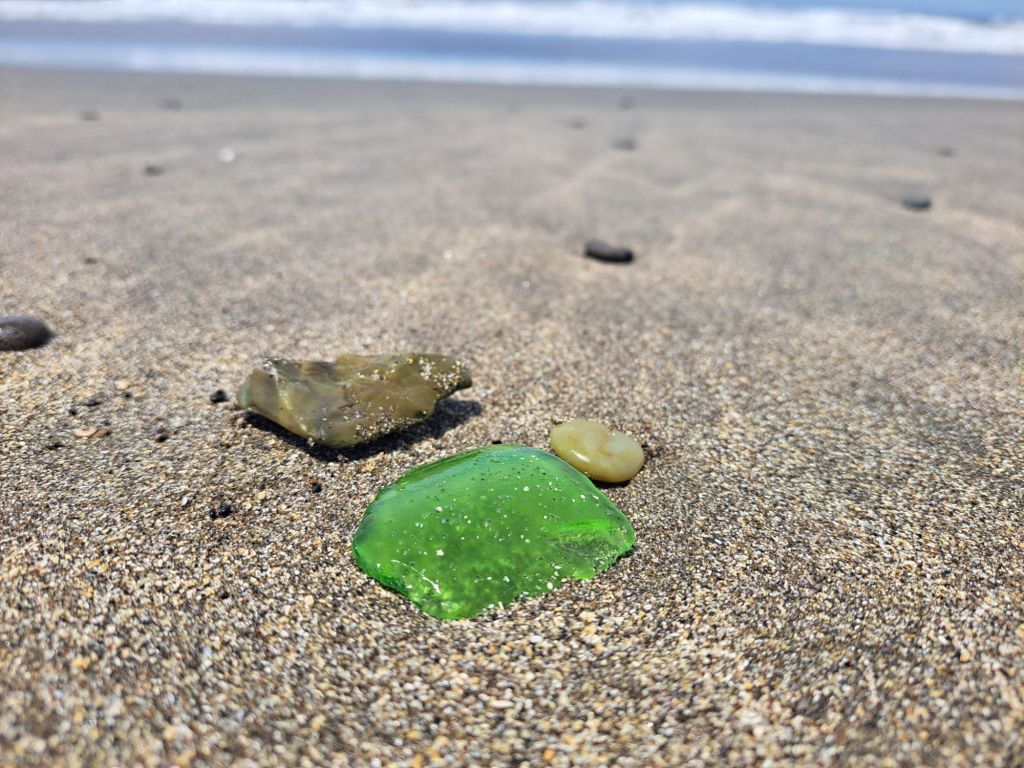
I found a few lone pieces of washed up sea glass, but nothing like at Glass Beach down the road.
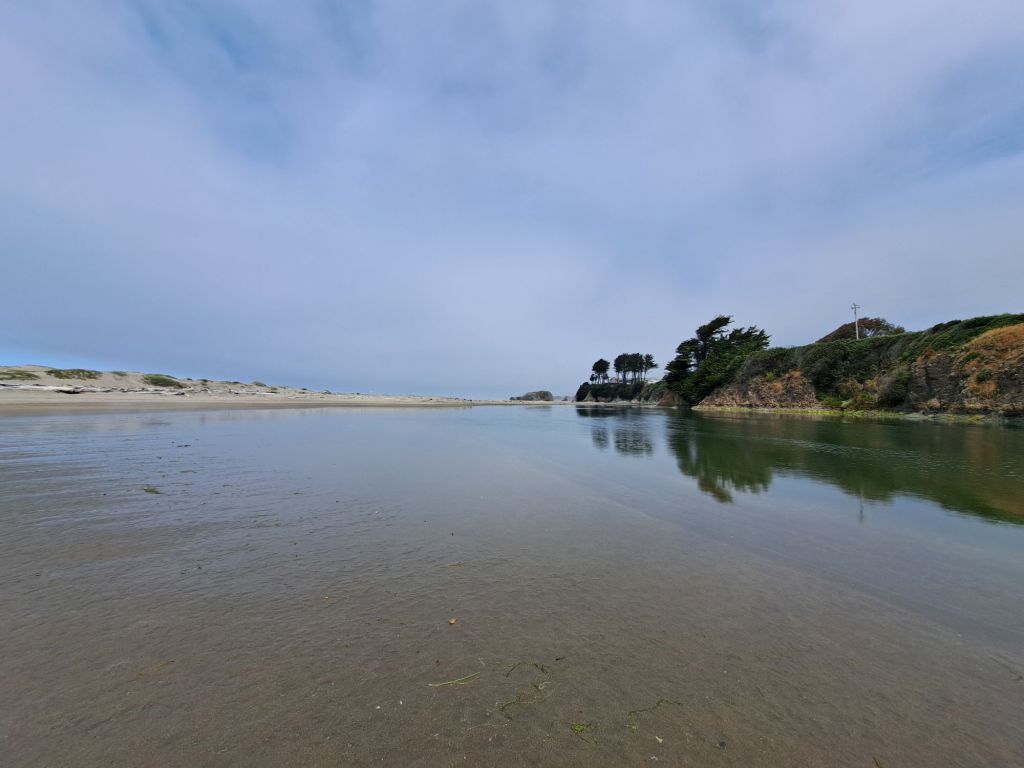
What I found an unreal amount of was sand dollar shell fragments. None of them were intact, but they were huge, and went on for miles.
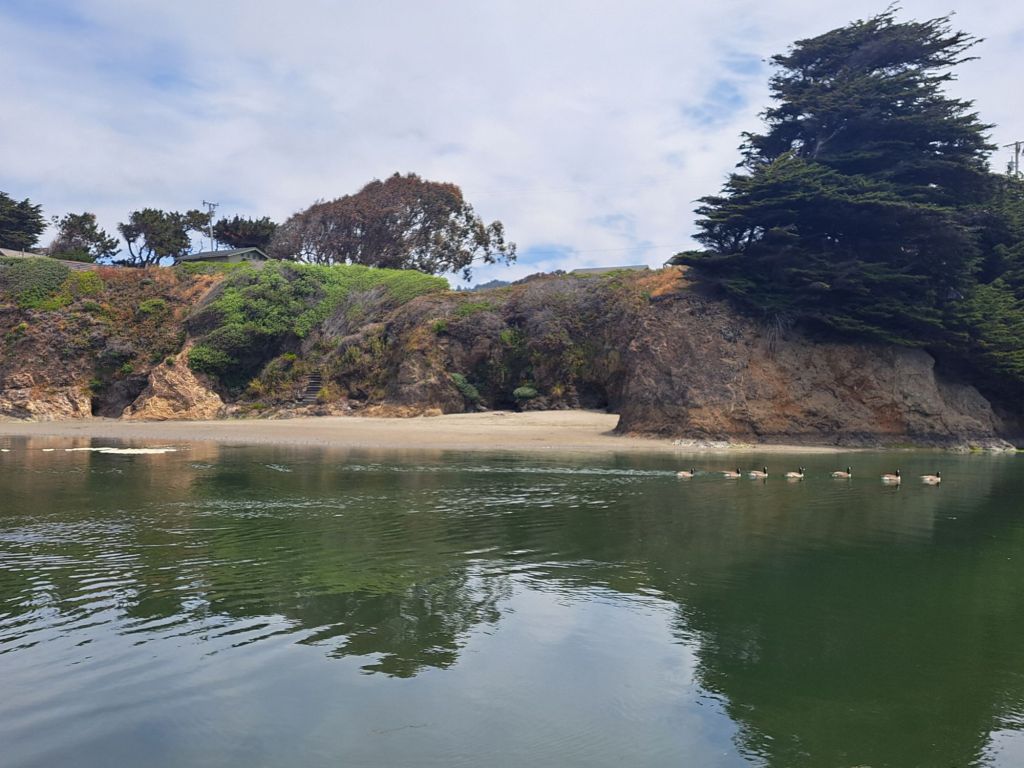
There were also millions of tiny perfectly rounded black, red, and orange sea pebbles.

The best thing about this beach was how isolated it was. The entire time I was walking down the shore, I only saw one or two other people from a distance.
Historically, 10 Mile Beach marked the end of the Pomo Native American Reservation.
Pomo lived between this beach and Noyo Headlands until they were force marched to Central California by Fort Bragg soldiers.
Imagine living in one of the most beautiful places in the world, and being violently forced to move to an ugly desert. How devastating that must have been.

Today, the Pomo help the park service restore the habitat to its natural status. They help protect vulnerable species, and educate park rangers on sustainable practices.

This beach is about twenty miles up the road from Glass Beach.

 Camp Host Diaries